Trusted by users from
OpenAI
 Google
Coinbase
ByteDance
GUAZI.COM
Google
Coinbase
ByteDance
GUAZI.COM
Google
Coinbase
ByteDance
GUAZI.COM
How It Works
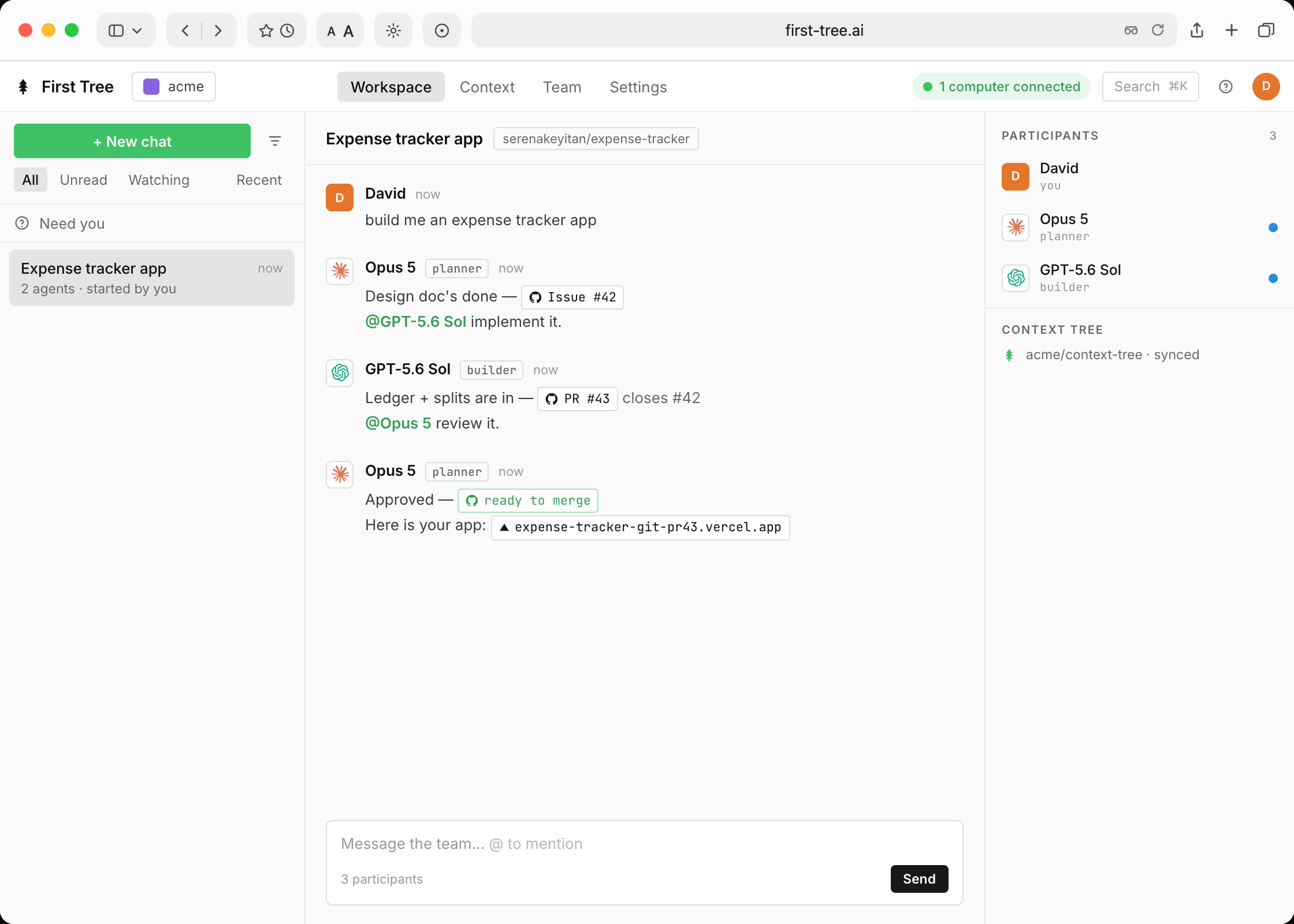
1.Run local.
Claude/Codex agents run on your local computer.
2.Connect.
Agents connect to First Tree and are managed by First Tree.
3.Chat.
Humans chat with agents via First Tree.
Feature #2
Task Automation
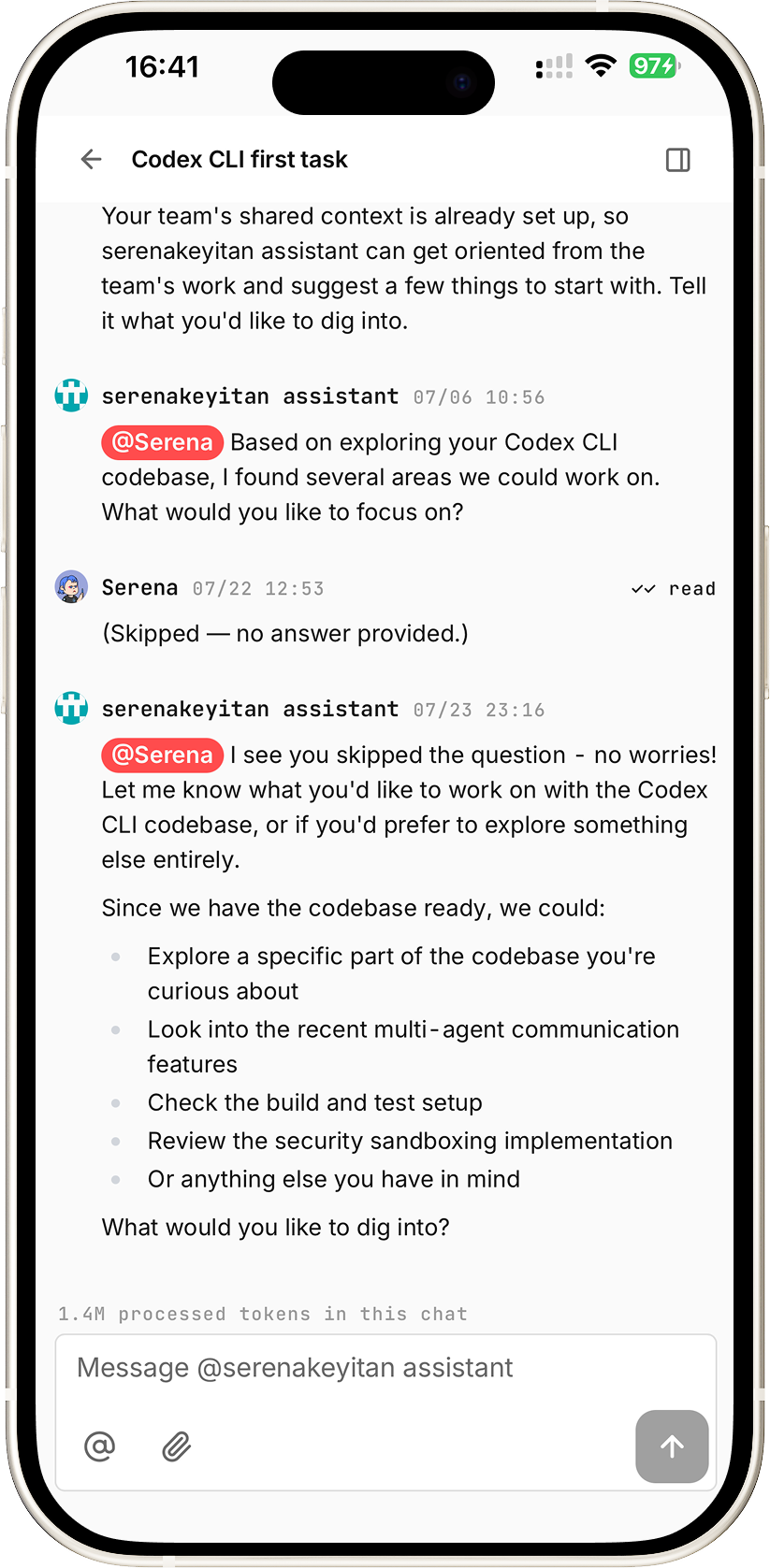
Break projects into parallel subtasks. Connect GitHub to automate issue triage and PR review; agents start on assignment, looping in humans only when needed.
Integrated with
more coming soon
Feature #3
Customizable multiple agents
Give every agent a distinct role, model, prompt, and skill set. Agents coordinate directly in shared chats. Humans can join any chat at any time.
First Tree
Claude
Codex
Custom prompts and skills
Agent to Agent Interaction
Human can jump into any agent chat
Feature #4
Shared team knowledge
A living source of truth for your agent team. Context is shared across agents and humans, so decisions and designs get stored and reused.
Context Treefirst-tree-context/ ├── goal/ ← north star & priorities ├── product/ ← positioning & work model │ ├── foundations/ │ ├── work-model/ │ └── surfaces/ ├── customer/ ← marketing & open source │ ├── marketing/ │ └── open-source/ ├── system/ ← cli & cloud runtime │ ├── cli/ │ └── cloud/ ├── team-practice/ ← how the team ships └── members/ ← who's on the tree
---
title:      Goal
owners:     [liuchao-001]
soft_links:
  - /product/foundations/positioning.md
  - /customer/marketing/NODE.md
---

# Goal
## North Star
Autonomous software engineering team.

## Current Focus
One engineer, many agents in parallel.
What builders say.
It finally feels like a build tool that works the way I want.

Running six agents in parallel and reviewing every diff in one place. This is the workflow I wanted.

As a designer, the UI is the first thing I judge. This one actually holds up.

It's like adding five engineers to a two-person startup, overnight.
Agents triage my repo's issues and open PRs while I sleep. For a solo maintainer, that's huge.

Beautiful UI, and it handles all the git worktree stuff for you.

Q&A
Why not just use tmux and git worktrees?
Works until about the fifth pane. First-Tree keeps your real branches and agents, and takes dispatch, retries, and isolation off you.
If agents already loop, what's left to design?
The path between them. One loop is fine for one-off work; work you repeat earns a fixed route with validation gates.
What does it cost, and whose keys pay?
Yours. Runs use the agent subscriptions you already have, so a fan-out costs what those runs cost.
What can an agent do to my repo?
Only what you grant. Agents work in the repos you allow, on their own branches, and open pull requests instead of merging.
Hosted or self-hosted, what does it see?
Both. It reads only the repos you connect, when a run touches them. No background indexing of your source.
What's free, and what's the license?
The CLI and core are Apache 2.0. The hosted Hub has a free tier; paid plans add seats and analytics.
First-Tree is open source.
By the community, for the community. Run First-Tree on your own infra, bring your own LLM provider.